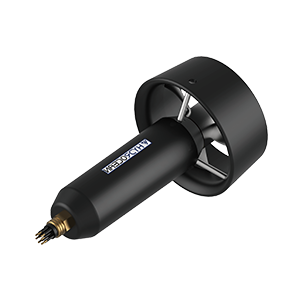
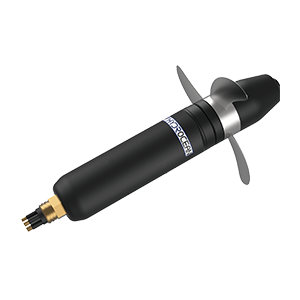
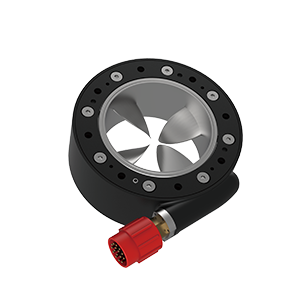
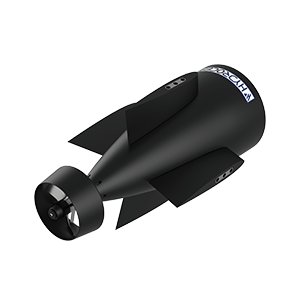
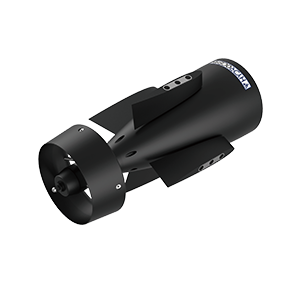
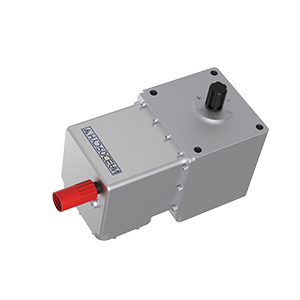
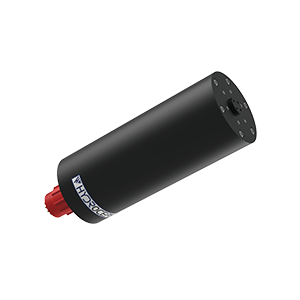
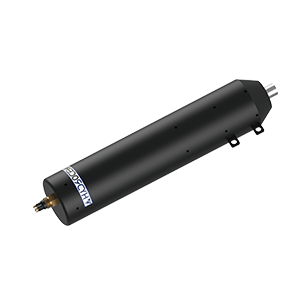
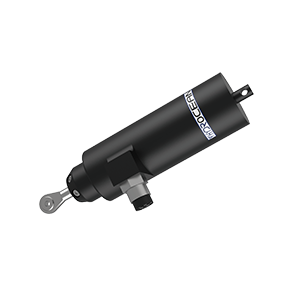
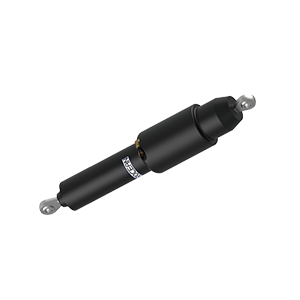
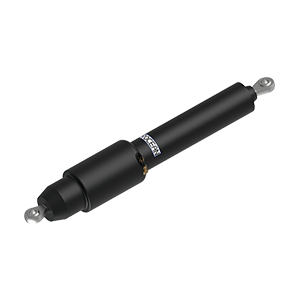
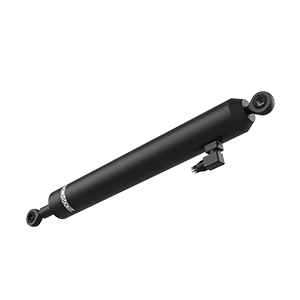


Start with the ROV’s DC bus voltage and maximum operating depth. Then use the forward and reverse thrust curves to check each operating condition. The table gives published figures for three ducted subsea thrusters. Before specifying a model, check the supply, installation, control interface and wet-mate or other subsea connector for the configuration being ordered.
Shortlist three ducted thruster models
| Model | Forward / reverse thrust | Input power | Datasheet supply voltage |
|---|---|---|---|
| TD10A | 10.7 / 6.5 kgf | 500 W | Series range 24–300 V DC, depending on configuration and connector |
| TD25A | 25 / 13 kgf | 1.25 kW | 48–300 V DC general range. The full-ocean-depth oil-filled version uses 120–300 V DC |
| TD120A | 122 / 60 kgf | 6.5 kW | 260–600 V DC, subject to configuration and connector |
Check thrust at the operating point
List the thrust needed along each axis for cruising, holding position in a current, reversing and moving sideways. Use the operating current, payload and thruster mounting angles when reviewing the curves. Check reverse thrust when the ROV must brake or hold position in either direction. Size the electrical supply for the thrusters running together and allow for cable voltage drop and drive current limits.
Match depth, water type and drive location
The datasheets list separate configurations for freshwater aluminium housings, seawater titanium housings and seawater oil-filled compensation. Confirm the exact depth rating with the drive location and connector. Some TD10A configurations use 24–36 V DC with one connector and 48–300 V DC with another. For full-ocean-depth work, use the supply voltage and connector listed for that specific configuration.
Review the product pages and English datasheets
TD10A product page
TD10A datasheet
TD25A product page
TD25A datasheet
TD120A product page
TD120A datasheet
Request a configuration review
Send the maximum operating depth, water type, DC bus voltage, target thrust in each direction, control interface and available space. Include the operating point you need to meet or an installation drawing if available. Contact Hydrocean